 Some of the most powerful leaders of the feminist movement today are females who aren’t yet old enough to drive. They can’t get into an after-hours club to see a favorite band, order a drink, buy cigarettes or vote. But they are talking about reproductive justice, sexual expression, and political accountability better than anyone right now.
It’s slowly, but loudly becoming clear that millennials (and younger) are not only relevant to the feminist discussion, they are shaping it. The online space has exploded with blogs about teens and feminism—namely, by feminist teens. Feminist academia is understanding, on a curriculum level, that studying this demographic is essential to understanding the very history of women’s studies, and most certainly it’s future. Young girls from Austin to Afghanistan are inciting the most provocative feminist discourse right now by simply living—and defending—their convictions.
Feminism is far from dead, as headlines so exhaustingly decree. In fact, girls are killing that very idea. Consider these young ladies who are leading the way:
Tuesday Cain: This 14-year-old from Austin became the center of an Internet media frenzy by speaking up about reproductive rights—in an awesome, witty way. When the Texas legislature recently voted to approve a sweeping round of abortion restrictions for the state, Tuesday joined her parents on the Capitol steps to protest. Her sign, written on the brightest power-pink poster board, read: “Jesus isn’t a dick; so keep him out of my vagina!”
Awesome, right?
She was immediately attacked by the conservative media, jerks on Twitter, and even her own state’s legislators. They called her a whore. They called her parents child predators. They called her ugly and yelled in her face. Her dad, pictured with Tuesday in the photo, wrote this eloquent defense of Tuesday and feminism.
She came back strong on her own with an essay on xoJane that, rather than being defensive, extended the conversation about feminism and freedom of speech:
“I’m a 14-year-old girl who has lived in Austin, Texas, my whole life. I like art, music and talking on the phone with my friends. When I grow up, I’d like to become a science teacher.
I also believe in the right to choose and the separation of church and state… That doesn’t make me a whore.”
Feminists have been called whores since before there was even a term for being a feminist. Tuesday is a child, but she makes it clear who’s mature in this situation.
“I’m not going to let someone calling me a whore stop me from fighting for what is right for all women. I’m not going to let the bullies win in the fight over women’s bodies… Normally, I prefer to look up to adults as role models. But what is happening in Texas right now it’s hard to find adults who I want to look up to.
I don’t look up to an adult who is taking away a woman’s right to choose.
I don’t look up to an adult who is calling a 14-year-old girl a whore.
I don’t look up to an adult who is screaming in my face and saying I am ugly.
And I certainly don’t look up to anyone who says they are Christian but treats women the way I’ve been treated these past few days as a teenage girl.”
Children are the best at pointing out the hypocrisy of adults. We should listen to them ore often.
Tavi Gevinson: Once a fashion phenom, more recently the creator and editor-in-chief of Rookie, an online magazine for teenage girls that promotes self-esteem, self-expression and individuality, is one of today’s most influential feminists. Really. She is constantly talking about feminism—proudly—effectively making it cool for teenage girls.
“Everything we do at Rookie is filtered through a feminist lens,” she told Makers in this great profile video. The site takes on the male gaze (something teenage girls are often told to ignore), sexist media and reproductive rights. And clothes, boys, homework, celebrity crushes, and dream boards. It’s one of the pioneer spaces on the Internet that speaks to teenage girls with respect to their intellect as much as their interests (makeup and clothes, yes, but we’ll pass on the skinny/white model of beauty and sexualized butt-graphics on our shorts, thanks.)
Tavi may very well be the Gloria Steinem of the future and as someone 20 years older than she, I’d be happy to follow her lead.
Malala Yousafzai: She was shot in the face by the Taliban at age 15 for campaigning for girls’ education.
She survived, recovered, and came back fighting more fiercely than before. Her recent speech at the UN Youth Assembly (her first since her injury) had the entire conference cheering on their feet. Here’s why:
“Here I stand… one girl among many.
I speak – not for myself, but for all girls and boys.
I raise up my voice – not so that I can shout, but so that those without a voice can be heard.
Those who have fought for their rights:
Their right to live in peace.
Their right to be treated with dignity.
Their right to equality of opportunity.
Their right to be educated.
Today I am focusing on women’s rights and girls’ education because they are suffering the most. There was a time when women social activists asked men to stand up for their rights. But, this time, we will do it by ourselves. I am not telling men to step away from speaking for women’s rights rather I am focusing on women to be independent to fight for themselves.”
Malala is a beacon of hope for millions around the world, and has effectively influenced heads of state to review their policies and peace accords. But most of all, she is a young girl being a young girl, wanting nothing more than to enjoy everything that goes along with that.
These girls are a few of the many who are fighting for the most feminist right of all: the freedom to be yourself.
 I just read a headline that blew my mind: “Women veterans becoming the fastest-growing homeless population in the U.S.”
 But sometimes we want our funny-woman fixright now, or at least when we’re not near our DVR. Luckily, the Web is full of comedic women. Here are five of our favorite sources for female funny.
 The media likes to ask female pop stars about feminism. A lot. In fact, for some reason, young female singers are bombarded with this question so much that it has become its own news category. When someone like Taylor Swift or Beyonce answers the question, “Are you a feminist?”, the Internet blows up with critique. There never seems to be a right answer.
 Women in Afghanistan still suffer some of the worst gendered conditions in the world: forced marriages, lack of education, and conditions far beyond anything we can encapsulate in even those awful-sounding soundbites. One of our favorite organizations works to empower women there through fostering and publishing their writing about their lives, the Afghan Women’s Writing Project. Another idea: Giving women there economic power by fostering sales of their crafts. Read more at The Daily Beast’s Women in the World.
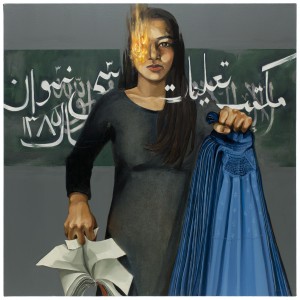 Looking at the painting, “Girl Under the Taliban,” (left) by Hangama Amiri is like being slapped across the face with a reality check. In it, a young woman sears a determined stare into the viewer’s mind with one eye while the other burns with fire. She’s clutching a textbook in one hand and a burqa in the other. It assaults you with its literal message of oppression, but confounds even more with its rich complexity. It’s the story of Nargis, a 13-year-old Afghan girl banned from seeking education under the Taliban. It is not a unique story, but it’s one that isn’t being told nearly enough.
 Canadian Judge Doesn’t Send Rapist To Jail Because “Sex Was In The Air”: In a case where the woman was wearing (gasp!) a tube top with no bra, high heels, and “plenty of makeup,” it was more OK for the man she was with, Kenneth Rhodes, to force intercourse with her on a dark highway. At least that’s what Queen’s Bench Justice Robert Dewar decided. Poor guy; he was just a “clumsy Don Juan.” He sure was clumsy — he left a permanent scar on the victim’s knee from the the attack. But “Protection of society is not advanced one iota by putting Mr. Rhodes in jail,” Dewar said. That’s where he is oh, so wrong.
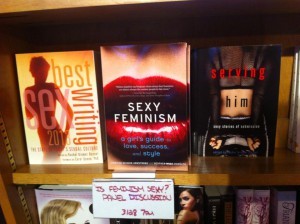 Last night, I had the honor of moderating a panel filled with some of my favorite feminist ladies discussing the big issues of the day (that’s Lean In and gay marriage to you) at Word Bookstore in Brooklyn to promote Sexy Feminism. We had four spectacular women from different parts of the femi-sphere: Rachel Kramer Bussel, the lady to go to for great sex writing and erotica anthologies; Britt Gambino, Sexy Feminist’s gay-lady contributor (as she likes to call herself); Julie Gerstein, an editor at The Frisky; and Jamia Wilson, a media activist. You never really know how panels full of people who have never met will go, especially on such hot topics. But I was blown away by the level of discourse — yes, it was so smart that it was discourse! — as well as the fact that the discussion was entertaining and engaging without being any sort of fight. I wish I’d recorded the entire thing so everyone could see how amazing it was, but instead I’ll give you a few highlights of what I learned:
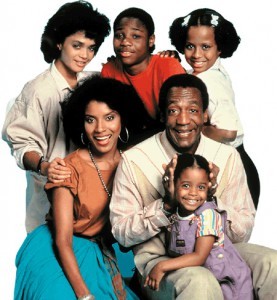 I’ve been overdosing on Cosby Show reruns (6-7 p.m. EST weekdays on Centric!), and watching the series as an adult, I’ve discovered something surprising: It’s feminist. Like way feminist. Like stridently feminist. The show overall is not an exercise in subtlety, of course — Bill Cosby meant to teach you all some things while making you laugh — but wow. Cosby carefully and famously avoided taking on most modern issues — namely racism, but also anything political or topical. Except, it seems, the issue of where women stood in Cosby’s vision of a perfect world. As a man who was preaching strong family, he wanted to make one thing clear: In his mind, “family” was not a euphemism for patriarchy like it is for so many others.
 The Bachelor
 Given the early coverage before the debut of Comedy Central’s Inside Amy Schumer this spring, I figured we were in for another dirty-girl comedian — Schumer was most often compared to Whitney Cummings and Sarah Silverman. I don’t dislike either of those ladies, but both of them, when at their best, retain the whiff of women trying to make it in a man’s comedy world. Of course, it is a man’s comedy world, and I can’t blame them, and I loooved every bit of the shock value of The Sarah Silverman Program. (I also happen to enjoy the show Cummings co-created, 2 Broke Girls. We won’t talk about Whitney.) Cummings and Silverman do the comedy equivalent of business women wearing hyper-masculine, shoulder-padded suits in the ’80s as they fought their way to boardroom levels: They made it in an astonishingly male-dominated profession by out-boying the boys.
 Talented Friend of Sexy Feminist Lauren Ramidrew this tremendous illustration of a Soul Train dancer (don’t you want to frame it and put it in some inspirational place in your apartment?) in homage to the women she loves to watch on the quintessential ’70s dance show. She wrote us a guest post about what inspired her.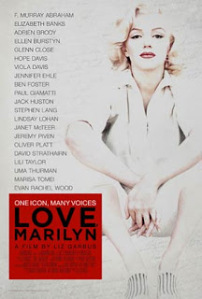
 Pop quiz: Whom is the show Game of Thrones“made” for?
